


CIPP Lining vs Excavation for Sewer Repair
- thetrenchlessguys
- 4 days ago
- 5 min read
A sewer line failure under a driveway, mature landscape, basement floor, or active parking lot creates more than a plumbing problem. It can interrupt daily life, damage property, and force a costly decision before the full condition of the pipe is known. When comparing CIPP lining vs excavation, the right answer depends on what the camera inspection finds, where the pipe runs, and whether the existing line can still serve as a reliable host for repair.
For many Akron-area properties, trenchless lining can restore a damaged sewer with far less digging. But excavation remains the better solution in certain situations, especially when a pipe has collapsed, lost its slope, or needs to be relocated. A qualified diagnosis should lead the decision, not a one-size-fits-all sales pitch.
CIPP Lining vs Excavation: The Core Difference
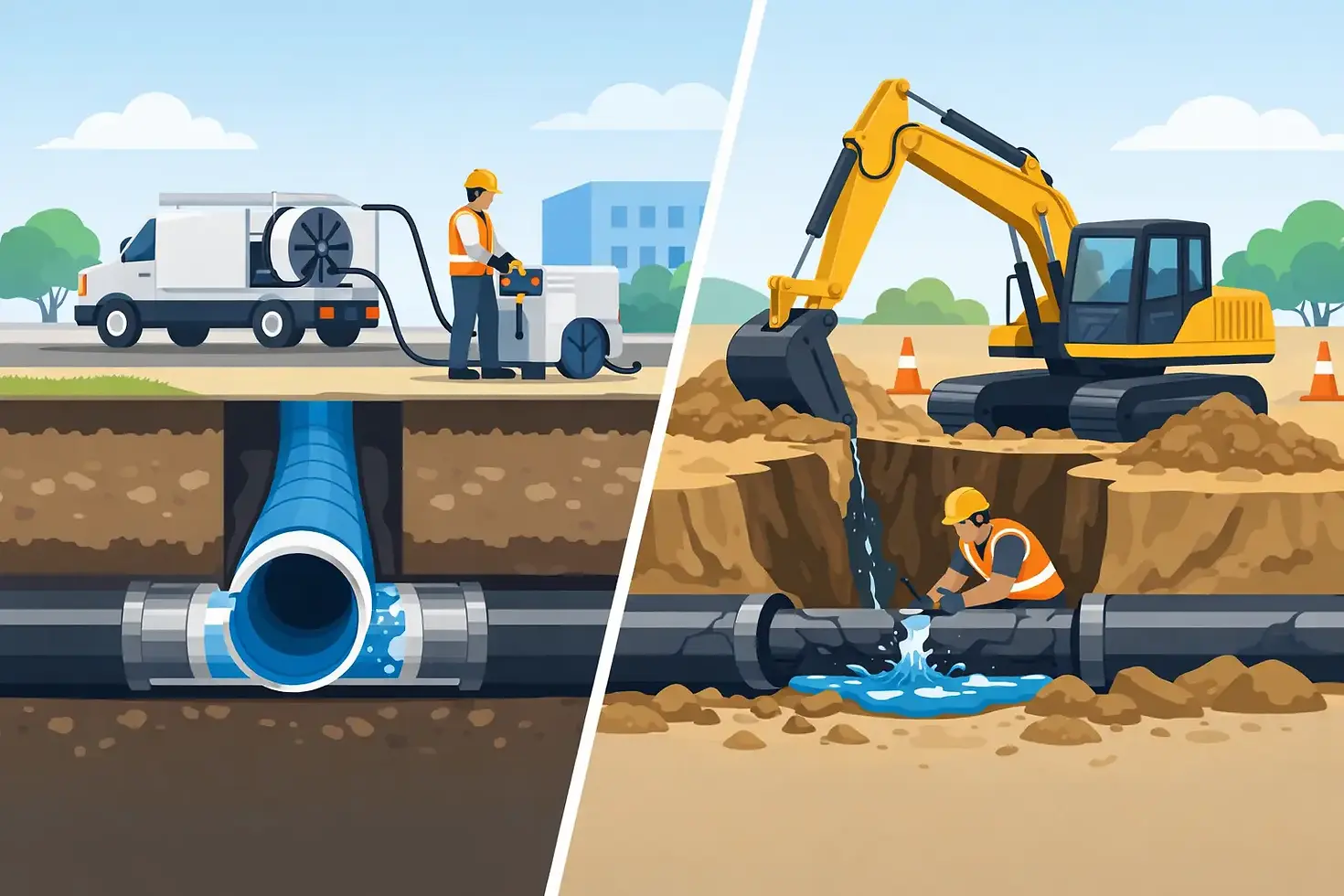
CIPP, short for cure-in-place pipe, repairs a sewer from the inside. After cleaning and inspecting the line, a resin-saturated liner is inserted into the existing pipe, positioned over the damaged area, inflated, and cured. The result is a new, jointless pipe within the old one. Access is usually made through an existing cleanout, manhole, or a small access point rather than a full-length trench.
Traditional excavation removes soil to expose the damaged line. The contractor cuts out and replaces failed pipe sections, then backfills the excavation and restores the affected surface. This approach gives direct access to the sewer, which is valuable when the pipe itself cannot support an internal rehabilitation method.
Both methods can provide long-term results. The practical difference is how each method handles site disruption, pipe condition, project duration, and restoration work.
When CIPP Lining Is the Better Repair
CIPP lining is often an excellent fit for structurally compromised pipes that still maintain their general path and flow. It can address cracks, root intrusion points, separated joints, corrosion, and small holes without digging up the full route of the line.
For a homeowner, that can mean avoiding the removal of landscaping, patios, sidewalks, garages, or sections of a finished basement. For a commercial facility, it can reduce disruption around loading areas, parking lots, tenant spaces, and public-facing entrances. Less excavation also means less restoration work after the pipe repair is complete.
The liner creates a smooth interior surface that helps improve flow and removes joints where roots commonly enter. Because the finished liner is continuous, it can seal multiple defects along a pipe run rather than requiring several separate spot repairs.
CIPP is particularly useful when a sewer runs beneath hard-to-replace surfaces. A pipe below a driveway may be repairable through small access points at each end, rather than requiring the driveway to be cut and replaced. The same advantage applies to lines beneath established trees, concrete slabs, and landscaped common areas.
That does not mean lining is always the lowest-cost option. A short, easily accessible sewer repair in open soil may cost less to excavate and replace. CIPP becomes especially valuable when the avoided restoration costs and reduced downtime are part of the total project calculation.
What CIPP Lining Cannot Correct
A liner follows the existing pipe path. It can bridge many defects, but it cannot correct every underlying problem. If a line has a significant belly that holds water, the lining process will not restore proper grade. If the pipe is fully collapsed, severely crushed, or missing across a large section, there may not be enough sound host pipe to install a reliable liner.
CIPP also slightly reduces the inside diameter of the existing pipe. In most properly sized residential sewer applications, that reduction is minor and does not create a performance issue. However, pipe sizing, flow requirements, and the condition of branches must be evaluated carefully for commercial, municipal, or high-use facilities.
When Excavation Makes More Sense
Excavation is the direct solution when a pipe needs to be physically removed, regraded, upsized, or rerouted. It is often necessary for complete collapses, extensive offsets, major bellies, severe pipe deformation, or lines damaged by settlement and ground movement.
For example, an old clay sewer may have multiple broken sections and a low spot that repeatedly collects waste. Lining could seal cracks, but it would not remove the low spot or correct the drainage issue. Excavation allows the failed section to be replaced at the correct slope.
Excavation can also be the right choice when a damaged pipe is too shallow, too deep, improperly routed, or in conflict with another utility. In these cases, direct access gives the contractor control over the new installation and the ability to meet current code requirements.
The trade-off is disruption. Trenching may require removing landscaping, concrete, asphalt, flooring, or portions of a structure. Restoration can become a significant part of the project, particularly on properties with decorative hardscapes, mature trees, or highly used commercial surfaces.
Comparing Cost, Timeline, and Property Impact
The best comparison between CIPP lining and excavation is not simply the initial repair price. The full project scope matters.
With CIPP lining, costs are influenced by pipe diameter, length, access points, cleaning needs, liner material, branch connections, and the extent of damage. The repair itself is often completed quickly, and the reduced need for demolition and restoration can make it a cost-effective option for difficult-access lines.
With excavation, the pipe replacement material may be straightforward, but the project cost can rise based on depth, soil conditions, utility locating, surface removal, traffic control, permits, backfill requirements, and restoration. A line beneath a lawn is very different from a line beneath a busy parking area or building slab.
Timelines also vary. A simple excavation may be completed efficiently when access is open and the repair area is limited. However, larger excavations can require more preparation and post-repair restoration. CIPP lining can often shorten the active work period, which is particularly valuable for facilities that cannot afford extended closures or restricted access.
Neither option should be selected based on a price per foot alone. A complete proposal should explain the repair method, what conditions were found, what is included, and how the site will be left after work is complete.
Start With a Camera Inspection, Not an Assumption
The decision should begin with CCTV sewer inspection. A camera provides the information needed to identify root intrusion, cracking, corrosion, offsets, standing water, collapsed areas, and cross bores. It also confirms the pipe material, diameter, depth indicators, and the location of the defect.
For property owners, the inspection footage turns a hidden problem into a visible one. For facility managers and municipalities, it provides documentation that supports repair planning, maintenance decisions, and capital budgeting.
The Trenchless Guys Akron uses inspection and cleaning as part of a practical diagnostic process. Before recommending lining, the line must be cleaned enough to reveal its true condition. Sewer jetting can remove roots, scale, grease, and debris that would otherwise hide defects or interfere with a quality installation.
Questions to Ask Before Choosing a Method
Ask whether the pipe has enough structural integrity for lining, whether there is standing water caused by a belly, and whether there are collapsed or missing sections. Also ask what access points will be used, how branch connections will be handled, and what restoration is included if excavation is recommended.
For commercial properties, add operational questions: Can work be performed outside peak hours? Will access to tenants, deliveries, customers, or emergency routes be affected? Can the repair be staged to limit downtime? These details often determine the real value of a trenchless solution.
A Repair Method Should Fit the Failure
CIPP lining is a highly effective, minimally invasive solution for many aging and damaged sewer lines. Excavation remains essential when the pipe needs physical correction, replacement, or rerouting. The most dependable choice comes from matching the repair method to verified pipe conditions and the realities of the property above it.
When a sewer problem is hidden underground, the goal is not simply to avoid digging. It is to make the repair that protects flow, property, and long-term performance with the least unnecessary disruption.


Comments